The Boy Who Walked Alone
I spent forty years looking for someone to walk beside. And I found something else instead.

The first episode of Richard Gadd’s Half Man, a new mini-series on HBO, is just out. There’s a scene that strikes me deeply. It looks familiar, maybe even a bit cliché — similar scenes have been portrayed many times on TV and in films. It wouldn’t be a surprise if we eventually learn that Ruben — the sexy, troubled, violent big brother — is imagined, a Fight Club–like shadow conjured by the one who needed him most. The first episode has shown the plot may twist toward what will probably be a tragic ending. But there's something in this story that stays with me regardless of where it goes.
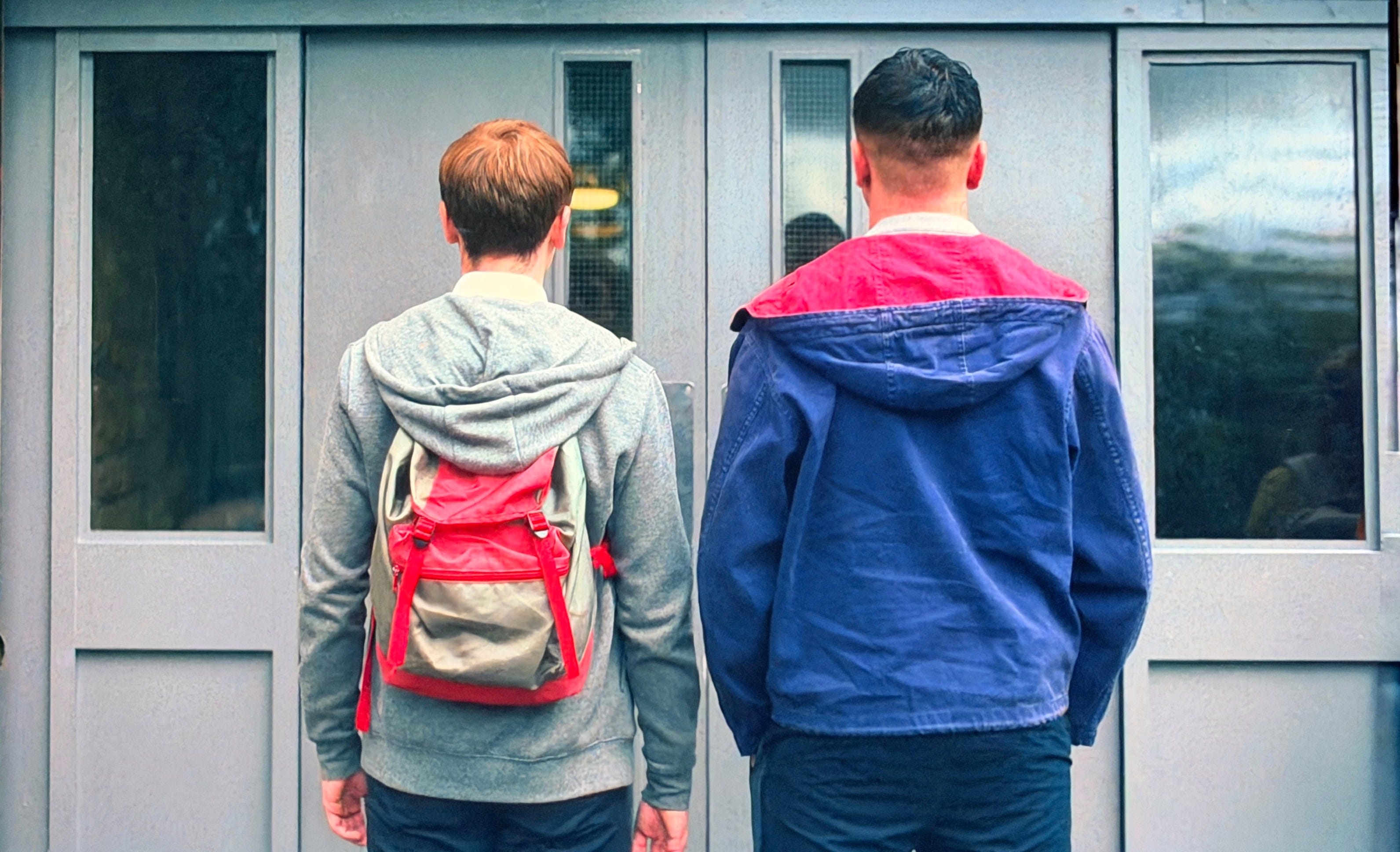
In the episode, Ruben has beaten up Niall’s bully. After sharing a joint in the morning, the two boys walk to school together. Same campus. Same faces. But everything has shifted. The girls look at Niall differently. The boys step aside. Niall walks with a swagger he’s never had, because next to him is someone fierce, someone dangerous, someone his. Not a friend. Not a classmate. A brother who chose violence on his behalf, and would do it again.
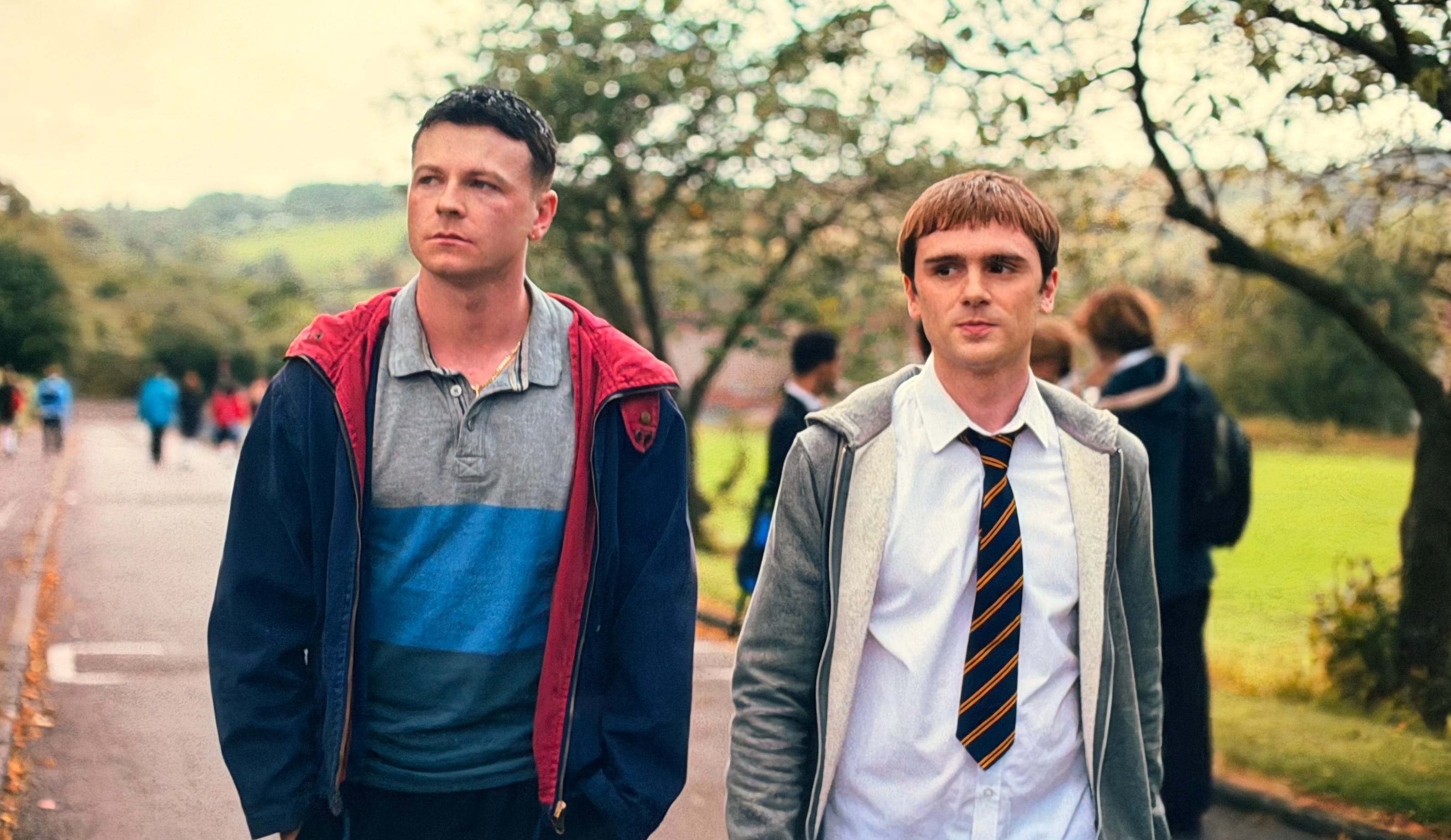
That walk. That floating above the rest. That strut toward the door. Facing the world together, knowing you’re protected, knowing you’re with someone strong and powerful.
I think that image has been the theme of my entire life’s pursuit.
I was two years younger than everyone in my class throughout my school years. I started early, my primary got shortened a year, and by middle school I was a full two years behind my peers in physical and emotional development. I never thought of it as a problem. I was proud, actually — not just keeping up but thriving as a top student, still outperforming classmates who were bigger, older, stronger than me. The teachers loved me. My parents paraded my grades without faking modesty. I was the model, the Valedictorian.
But the attention was also a curse. I was untouchable in a culture where test scores are the only social capital among adults, but no one can force acceptance in the more primal, crueler social system among kids. In PE class, I was dead last. The constant F among all the As. I was the boy who couldn’t live up to a standard set for a body two years older than mine. PE teachers aren’t like math teachers. They don’t protect the smart ones. In the classroom, I was superior. On the field, I was meat.
I was utterly isolated. My classmates, fed up with being compared to me, pushed me away as a source of their frustration. My boy cousins had lived for years under my academic shadow. The adults had put me on a pedestal, but idols aren’t meant to have friends among those who are made to worship them.
And on top of all that, I had secrets from such a young age that hiding became my operating system. Gay, masochist, maybe submissive too — since primary school or even earlier, I’d known it when I encountered the words from books a decade ahead of my time. Drawn to boys, drawn to power, drawn to a powerful male figure. Finding sexuality before adolescence. Knowing how my body worked before any teacher or parent explained it. These were secrets that had no outlet, no language, no one to tell.
So I lived in a split. The same institution that rewarded me in one room abandoned me in another. And I learned — not as an idea but in my body — that intelligence could earn protection from authority, but it could never earn belonging from peers. In the physical world, I was prey. The smallest, the weakest, the one who talked differently, moved differently, carried himself in ways that other boys couldn’t name but could smell.
The boys I wanted to belong with were the ones who had what I didn’t. The type was imprinted in me early. The bad boys. Failing academically but thriving physically. Hard with rough edges. Affectionate with aggressiveness. Exactly like Ruben. I was drawn to their ease, their carelessness, the way the world seemed to organize itself around their gravity. The girls wanted them. And I wanted them too — in ways I couldn’t name yet, or wouldn’t. I worshipped them — even that worship required pain and sacrifice to earn attention, affection, and protection.
I worked my way into their circles. It took effort — calculated, persisted, performed. I made myself useful — helped them cheat on pivotal exams, provided reliable good-kid alibis, just like Niall does for Ruben. I became the smart friend, the one who provided value. And in return, I got proximity. Not equality. I was the mascot. The little brother. The one tolerated because he was useful.
And I was okay with that. More than okay. I loved it. Because proximity to strength felt like safety. And safety was what I’d never had.
My parents loved me. They took care of me. But emotions weren’t part of the household vocabulary — not because they withheld deliberately, but because they themselves didn’t have the tools. Everything had to be earned through performance. Love was conditional. You perform, you receive.
When people talk about unconditional love — the kind where someone loves you simply as you are — it sounds like a foreign language. Not metaphorically foreign. Actually foreign. I understand the concept intellectually. I’ve never felt it arrive.
So the model was set early: perform, hide, earn your place, never cause trouble, never raise your voice, never ask for anything. The good student. The obedient son. The boy who stayed home and read books far beyond his age because books don’t ask for anything in return.
I didn’t know I was lonely. I just thought I was an introvert who liked to read. And brotherhood, it remains a fantasy, a concept in books.
In college, I found my tribe — the chorus. A group of people who valued what I valued: music, expression, the kind of intimacy that comes from harmonizing. And I exhaled, just a little. But even there, the hiding continued. I had a phantom girlfriend, and I talked about girls like every guy did. A performance for an audience that never asked to see behind the curtain.
And of course, I fell in love with one of the men in the group. He fit the template perfectly. Strong. Muscular. Big brother energy. Not conventionally handsome, but I’ve never cared about handsome. I care about the vibe, the carriage, the feeling of being next to someone who takes up space in a way you never learned to. What drew me deepest was the sensation of being protected — the feeling of walking next to someone and knowing, even if it was just a feeling, even if it was projection, that the world would concede because he was there.
I confessed. He shut me down. The friendship didn’t survive. The pain never fully went away.
But the template held. It just kept finding new faces to project itself onto.
Years later, more than a decade into life in America, I met someone who looked like the template had finally materialized in flesh again. And this time, he was gay — there was hope.
Everybody’s elder brother, a perfect match, I thought. Charismatic, enigmatic, utterly magnetic. I gave everything I’d been trained to give: service, devotion, patience, silence. I went down at his feet, hoping he’d notice me enough to claim me. I gave away things I loved — space, priority, myself — because that’s what a considerate boy would do. And I called it love. I called it care. I didn’t see then what I see now: that I was replaying the same scene from middle school. Finding the one with the ideal template. Making myself useful. Earning proximity. Hoping that enough service would eventually convert into something deeper — not sex, not even romance exactly, but that walk. That strut toward the door. The feeling of belonging to someone the world could see.
He didn’t choose me. It was never going to work. Not because he was flawed — we all are — but because I was asking one man to fill a role no single person could fill. The big brother from childhood. The protector from the schoolyard. The one who would claim me and make me visible. That’s not a relationship. That’s a rescue fantasy wearing camo pants.
And I know now — because I can see it the same way I saw it in that first episode of Half Man — that such fantasies are always tragedies. In the show, the devotion that once saved Niall on the campus is the same devotion that threatens to destroy him at the altar. The possession turns. If I can’t have you, I’ll ruin this.
The heartbreak was real. But what broke wasn’t just one relationship. It was the seal on everything underneath — the boy in PE class who had no protector, the teenager who confessed to a straight friend and was shut down, the immigrant who arrived in middle age with a lifetime of people-pleasing encoded into his nervous system. It all came out at once.
These days, when I watch Half Man, or anything that touches the nerve of brotherhood, protection, and the violence that can live inside devotion, I don’t just see a story. I see a map of my own interior. Territory I’ve spent the past two years exploring — with coaches, shadow work, honest conversations I couldn’t have managed in my previous four decades combined, and my writings.
I know now that the walk I’ve been chasing isn’t something another person can give me. The protection I was looking for was never external. It was the ability to protect myself: to say no, to say I need, to say this isn’t acceptable, to walk away in the first sixty seconds instead of spending years proving my instincts were right.
I’m learning. It’s not natural yet. It’s still a ten-meter dive every time — you see the water, you know you’ll survive, but you still have to make up your mind to jump.
A few weeks ago in Berlin, something happened that cracked me open in a different way.
Inside a crowded bar, someone noticed I was struggling to say no to something. He didn’t make it a big thing. He just said: if it’s hard to say, just blink. Once for yes, twice for no. So I blinked twice. He was a little surprised, but he said: okay. Sure. And then he told me it takes guts to say no to someone powerful and charming, someone everyone wants to be with. And then — to my surprise again — he said: if you want, I can talk to him for you.
I took him up on it. I know the whole point of the work I’ve been doing is to speak for myself, not to find another ambassador. But some things you can understand intellectually and still not be able to do in your body. Not yet. Not every time. The ten-meter dive doesn’t get less high just because you’ve jumped before.
He left to handle it. And I had to get myself out of the bar, into the street, to let the tears out.
It was past midnight, drizzling in Berlin. Cold. People passing by. I didn’t want them to see me, but I couldn’t stop. It wasn’t sadness. It was something closer to recognition — the feeling of being seen before I asked to be seen. Of someone noticing the struggle without being told it existed. Of receiving something I didn’t have to earn.
That’s what I’ve been looking for. That’s what the walk to the school door was really about. Not the violence, not the power, not even the protection. Just: someone sees you — all the hiding, all the performing, all the secret-keeping — and still chooses to stand next to you.
The next day, I told him thank you, and also: I know I need to do this for myself. It came out quietly, without drama. I know that for most people, that sentence would take four seconds. For me, it was a life’s work.
Lately my coach asked me to write a letter to my younger self. I’ve been stuck for over a month — though I could pour eight thousand words onto fifteen pages in a single day when writing to someone who broke my heart. Every time I start the letter, it turns into analysis. Because of this, you developed that. The coach’s voice. The therapist’s framework. Even this essay.
But I think I finally found the right voice. And it doesn’t need fifteen pages. It’s simply this:
I see you. The boy with the secrets and the books and the grades that couldn’t protect him where it mattered. The boy who performed so well to belong where everyone saw the performance, and no one saw the boy. The one who hid in the classroom because the field was a war zone. The one who fell in love with his friends because they had what he thought he could never have.
You weren’t fake. You were surviving. And you did it brilliantly. Look how far you’ve come.
But we don’t have to survive anymore. We can actually live now. We can say no. We can say I need. We can blink twice and let someone see us struggle and not die of shame. We don’t have to long to be seen and fear it at the same time.
The walk you’ve been chasing — the one with the protector beside you — I can’t promise you’ll find it. But I can promise you this: you’ll learn to walk alone without it meaning you’re unprotected. Because you’ll finally be the one protecting yourself.
It’s hard. It’s still a jump every time. But the water holds.
We have each other now. That’s enough to start.